

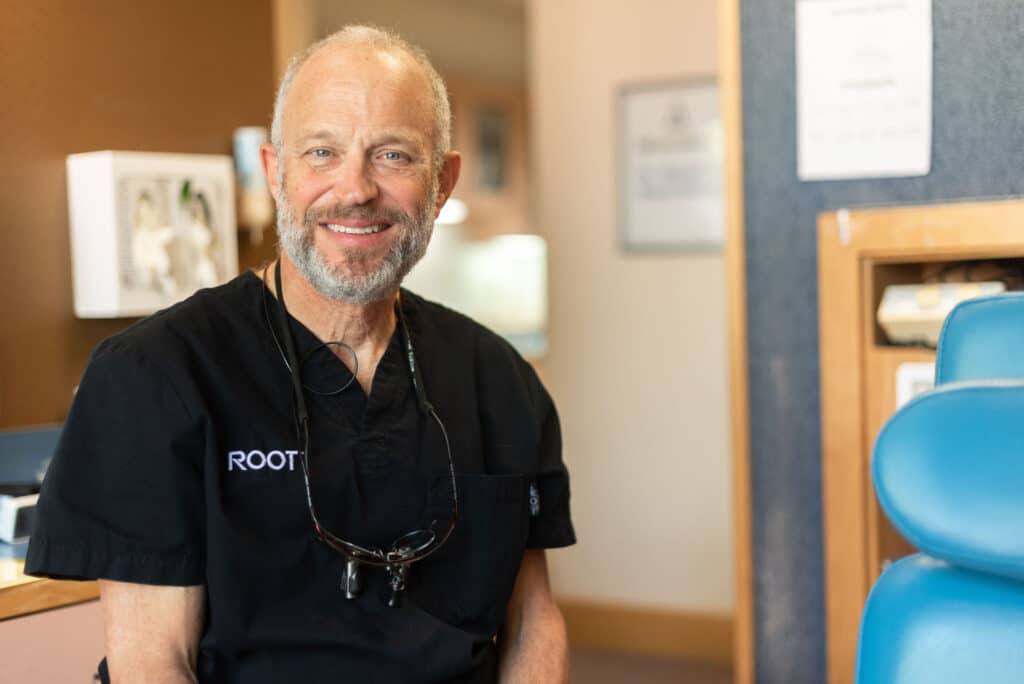
Dr. Patel
Periodontist
The training that Dr. Patel has received has given him a wide range of experience in treating advanced periodontal disease, complicated extractions of teeth, placement of dental implants, bone regenerative procedures, as well as in periodontal plastic surgery/cosmetic procedures.
Dr. Pooria Fallah
Periodontist
Dr. Fallah received his DDS degree in 2009 and subsequently completed his residency program in Periodontics at New York University College of Dentistry in 2015. He became a Diplomate of the American Board of Periodontics in 2016 and has been practicing periodontics in private practice in Dallas since 2015.
Dr. Husain
Periodontist
Dr. Husain is proficient in dental surgical procedures involving bone and soft tissue grafting, dental implant placement, minimally invasive LANAP and other laser procedures, and treating chronic periodontal diseases.
Dr. Li
Periodontist
Dr. Li is a Board-Certified periodontist and a Diplomate of the American Board of Periodontology. A Diplomate is a periodontist who has made significant achievements beyond the mandatory educational requirements of the specialty, demonstrating a comprehensive mastery of all phases of periodontal disease and treatment and in the placement of dental implants.
Why Ridge Augmentation
When a tooth is lost or extracted, the material beneath the tooth is reabsorbed, which causes your alveolar ridge to begin shrinking. Eventually, this will result in the ridge losing the required width and/or height to support a dental implant to replace the missing tooth or teeth. Because bone deterioration occurs at an exponential rate, it is important to have an implant placed as soon as possible following an extraction or loss of a tooth; however, if the bone around your tooth was thin to begin with, a ridge augmentation may be necessary. In addition to making it possible for dental implants to be placed, a ridge augmentation will also restore your facial structure's natural contours.
Ridge Augmentation Process
In order to determine if ridge augmentation is right for you, you will need to schedule an initial consultation, during which we will examine the overall health of your teeth, review your medical history, and determine what treatment options are best suited to your unique needs.
If ridge augmentation is determined to be the optimal treatment option for you, the steps involved in your procedure will depend on whether you are having a soft tissue or hard tissue ridge augmentation. Regardless of the procedure type, you will typically be given a local anesthetic. The type of anesthesia that is used may vary, depending upon the severity of your case as well as your overall sensitivity.
A soft tissue ridge augmentation begins with a small incision that is made to expose the bone beneath the gum. Next, soft tissue is taken from an area of the mouth and placed in the opened area. This incision is then sutured shut and allowed time to heal.
A hard tissue ridge augmentation also begins with a small incision that is made to expose the bone beneath the gum. Once this incision is made, a dental bone graft is placed in the opened area. Once properly positioned, the socket is sutured and allowed time to heal. Healing time for a hard tissue ridge augmentation is typically between six and twelve months.
Aftercare for Ridge Augmentation
Following your ridge augmentation, it will be important to closely follow the aftercare instructions. The specific treatment plan for recovery will vary based on each patient’s individual case, but regardless of the severity of your case, you will need to plan on following a soft food diet immediately following your procedure, slowly reintroducing harder foods as your healing progresses. It will also be important not to create unnecessary pressure in your mouth, which can occur when using a straw or smoking.
Once the healing process for your ridge augmentation is complete, the most important thing you can do to maximize the benefits and longevity of this procedure is to practice good oral hygiene habits, such as brushing your teeth twice daily and flossing at least once daily, ideally every time you brush your teeth. It is also important to practice proper brushing and flossing techniques. It is equally important that you continue to schedule regular checkups with your periodontist every six months. By maintaining a consistent oral health care routine, you will significantly reduce your risk of developing additional periodontal issues and will continue enjoying a bright and healthy smile.
Ridge Augmentation Cost
There are a range of factors that can impact the final cost of having ridge augmentation performed, such as the severity of your case, any associated procedures that will need to be performed prior to or along with treatment, and your insurance plan.
Our team is committed to helping you complete necessary paperwork, schedule appointments, and answer any questions you have concerning billing. For patients who have insurance plans, we do request that you submit medical/dental insurance information with your New Patient Paperwork to expedite this process.
Please note: to reduce costs to our patients while still ensuring that we can provide the highest level of care, we have the following financial policies:
- We accept Discover, Visa, MasterCard, and American Express
- Full payment is due after services are rendered
- Payment plan options are available via www.CareCredit.com
PERIODONTAL SERVICES
To determine if you have gum disease, your periodontist will measure the space between your teeth and gums. Patients who have pockets that are deeper than the average depth of three millimeters or less will be considered candidates for treating gum disease. Depending upon how severe your case is, your periodontist will suggest a follow-up appointment, during which several different treatment options may be recommended.
Patients who are suffering from periodontal disease may experience gum recession. If this issue is not treated at an early stage, more complicated and serious problems can develop, as gum recession creates greater exposure of your natural teeth, which creates opportunities for bacteria to build. To address this issue, patients have historically had gum grafting, which involves removing tissue from unaffected areas and then grafting this tissue to the areas that have been affected. This is an effective method for addressing the issue of receding gums. There is a newer and increasingly popular approach to treating receding gums, which is the Chao Pinhole Surgical Technique (PST).
Laser gum surgery is an advanced treatment option that efficiently and painlessly treats gum disease through the use of a laser. One of the unique aspects of laser gum surgery is that the laser pinpoints and kills bacteria without damaging surrounding gum tissue. Unlike other treatment options, which involve cutting and suturing, patients who have laser gum surgery and treatment performed will have a much quicker healing process.
Patients who have gum recession may consider having a gum graft, a common oral surgical procedure that thickens existing gums and/or covers a tooth root surface in order to prevent further recession from occurring. Gum recession can occur for a variety of reasons, but the most common reason is due to periodontal disease. A gum graft will not only improve the aesthetic appearance of your smile but will also reduce your risk of developing additional issues.
Patients who have an imbalanced ratio between their visible gums and teeth have what is commonly referred to as a gummy smile. Gummy smiles can be caused by a range of factors, including bone deterioration, periodontal disease, or genetic predisposition. Regardless of the reason, patients often feel self-conscious about their appearance and will seek to improve this issue by having a gum contouring procedure performed.
Scaling and Root Planing (also known as deep teeth cleaning and deep gum cleaning) is a common method used to address periodontal disease. Scaling refers to the process of removing tartar that has accumulated, either on your teeth or below your gumline. Planing refers to the removal of tartar below the root line. When bacteria are allowed to settle on your teeth for too long, it will eventually mineralize and turn into tartar. The primary difference between plaque and tartar is that plaque can be removed by conventional brushing methods, whereas tartar will need to be removed through the efforts of your periodontist. It is important to schedule regular deep teeth cleaning and deep gum cleaning appointments to prevent periodontal disease from developing.
Schedule Your Visit Today
At ROOT™ Periodontal and Implant Center, we take your oral health seriously. That is why we provide expert services that are intended to return stability, strength, and beauty to your oral cavity. Whether it be through periodontal or implant care, we will restore both your smile and confidence.
If you would like to learn more about ridge augmentation and see if ridge augmentation is right for you, schedule an appointment for a consultation today. We provide services at the following locations:
Carrollton: (972) 242-7603
Flower Mound: (972) 434-8050
Denton: (940) 566-7021
Frisco: (469) 489-ROOT
We look forward to meeting you and providing you with the expert care you need!